OVERVIEW
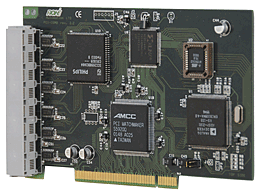
ROHE PCI-COM8 boards technology are intelligent, high-speed (up to 115.2 kbps) multiport boards providing high performance serial I/O solutions for PCI bus systems. All port interfaces are standard RS-232 with partial modem control (one control signal out and two control signals in) and voltage surge protection.
PCI-COM8 Boards appear to the system host processor as memory. That is, they are memory mapped devices. Each board is automatically mapped into system memory at the time of device driver installation. The device driver soft-configures all boards each time the system is initialized (booted).
The board occupies a single PCI slot in the host computer and provides the intelligent functions to "off-load" the CPU serial communications processing tasks.
PCI SYSTEM SETUP
Peripheral Component Interconnect (PCI) system architecture has a design feature termed Plug and Play. This feature automatically detects, identifies and configures the currently installed devices each time the system is booted. Therefore, whenever an adapter card is installed (or removed) in a PCI system, the card is recognized and configured immediately upon restart.
DEVICE CABLING
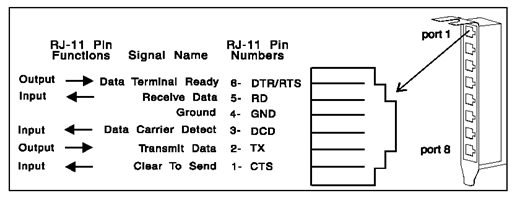
The figure shows the RJ-11 port orientation and pin-outs for the PCI-COM8 board. Pin 6 acts as Data Terminal Ready (DTR), when connected to a modem (i.e. it will be dropped when the operating system wants to disconnect the call). It will act as Request To Send (RTS) when a device is directly connected and hardware flow control is enabled.
SUMMАRY
The equipment has been tested and found to comply with the limits for Class A digital devices, pursuant to Part 15 of the FCC rules. These limits are designed to provide reasonable protection against harmful interference when the equipment is operated in a commercial environment. This equipment generates, uses, and can radiate radio frequency energy and, if not installed and used in accordance with the instruction manual, may cause harmful interference to radio communications.
Operation of this equipment in a residential area is likely to cause harmful interference in which case the user will be required to correct the interference at his own expense. |


